Russia Today – Y9 scholar
Russia Today
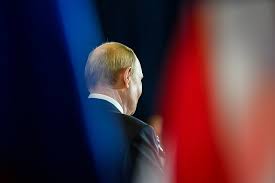
To start off we need to go back to 1952 in Leningrad (Now is St Peterburg), 7 years after the end of WW2. He lived in small flat with insects. His parents almost died in the Blockade of Leningrad, but his brother could not survive. In his youth he liked judo and other martial arts, which is really important to his life. His coach said that Putin was really patient and perseverant. When he was 16 years old, he went to the CSS (intelligence agency) to ask what he needed to study to work there: he was told, law. And so he spent 16 years working in intelligence.
How did he go from this to be such a powerful figure?
The turning points of his ascent look like this: 1989-1991: Return to Leningrad, work with the mayor Anatoly Sobchak. August 1999: Appointed prime minister. Back then, he was a little-known figure. 31 December 1999: President Boris Yeltsin unexpectedly resigned, appointing Putin as acting president. The first thing Putin promised was to prevent a “power vacuum.” March 2000: Won the presidential election.
Of course he is currently most associated with his war in Ukraine. The conflict is now in its fifth year and has escalated into a protracted war of attrition. The public position of the Russian president remains unyielding. It continues to demand from Ukraine the ceding of all territory of the Donbas and he rejects proposals for a ceasefire, insisting that peace conditions must first be agreed. Western diplomatic efforts, including previous initiatives, have not yet led to a breakthrough. Fighting continues daily. In the last 24 hours (5 June 2026) alone, there were 269 engagements, and there have been scores of casualties this week alone as Russian troops continue offensive operations and conduct massive strikes on Ukrainian cities (missiles, drones, aerial bombs).
Russian economy was at its strongest in 2018. But what is going on now? Russian business are closing because rent is expensive and all international services are being blocked. This means that you must pay more tax and rent, and small business just cannot survive. Another big problem is IT. The IT specialists are leaving Russia because it is impossible for work. VPNs getting blocked and international services also getting blocked. In June 2026, an unprecedented event occurred at the St. Petersburg Economic Forum: several billionaires from the Forbes list publicly criticized the government’s economic policies. They called it a “trap” that stifles business and leads to stagnation. This is the first such loud split in the elites’ consensus since the war began.
What about the soldiers? Accurate data on losses is a state secret. According to estimates by Western intelligence (GCHQ), since the start of the full-scale invasion, the loss of Russian military personnel (killed and wounded) is approaching 500,000. The Ukrainian General Staff estimates irrecoverable losses of 1,372,270 people (including wounded and dead).
The outlook for the near future remains bleak. The war will not end tomorrow: experts and journalists agree that Putin has no intention of giving ground, compromise is still out of reach, and conflict threatens to become an “endless special operation.” However, for the first time in a long time, there has been a cautious narrative in the Russian press that “lost wars are sometimes more beneficial to the country’s development than protracted battles of victory. If the war does not end soon, the economy may face not just stagnation, but a full-blown crisis due to labour shortages, stifling credit, and sanctions.












Post Comment
You must be logged in to post a comment.