Why Everything Feels Worse at 2am – Mia P
I’m sure we can all relate to that feeling of lying in bed unable to sleep, running every minor detail of every moment in our lives over in our head and suddenly you saying “You too” after someone wished you Happy Birthday on your 6th birthday is the most harrowing memory ever. You begin to re-read messages wondering if it maybe was your fault and you didn’t communicate well or you consider every other possible outcome that could have happened but didn’t. You finally fall asleep and wake up in the morning to nothing going your way, your shirt gets stuck on the door handle as you leave your room in the morning, there was an air bubble in your toothpaste tube and it all comes out too quick and that’s already your final straw for the day and then you just can’t seem to get out of that mood. But that could never be because you were up so late last night… could it?
At 2am, your brain becomes louder but often less accurate at the same time. Your circadian rhythm (aka your body clock) controls your sleep and alertness, and it cannot do one without the other. If your brain becomes tired because you stayed up for “just one more TikTok” your rational thinking worsens, the part of your brain that helps you stay calm and logical becomes less active and the emotional part becomes much more dominant and your 5 hours of sleep does not fix that. That’s why, that night and into the next day: small worries feel bigger, you jump to worst-case scenarios and its harder to just leave those negative thoughts behind you.
When you’re tired, your brain fills in the gaps with negative assumptions, and your thinking becomes less balanced. You may recognise this through constantly assuming the worse (“they hate me” because it took me 1 hour to reply to their message instead of 1 minute), mind reading (“everyone thinks … about me”) and catastrophising (“this is going to go so badly” and you’ve only written the first sentence or drawn the first line). In psychology, these are known as cognitive distortions – irrational, thought patterns or “thought traps” that inaccurately convince people of negative realities.
But why does loneliness feel stronger at night? Well, at night: you’re physically alone more often, there are fewer distractions from school or conversations, and you just have more time to think. But more time to think can often lead to overthinking, instead of clearing your head. Therefore, it isn’t uncommon to feel more isolated, more disconnected and most of all like you’re the only person who feels that way. In the quiet of the night, everything may feel more personal, even when it isn’t – and that is normal.
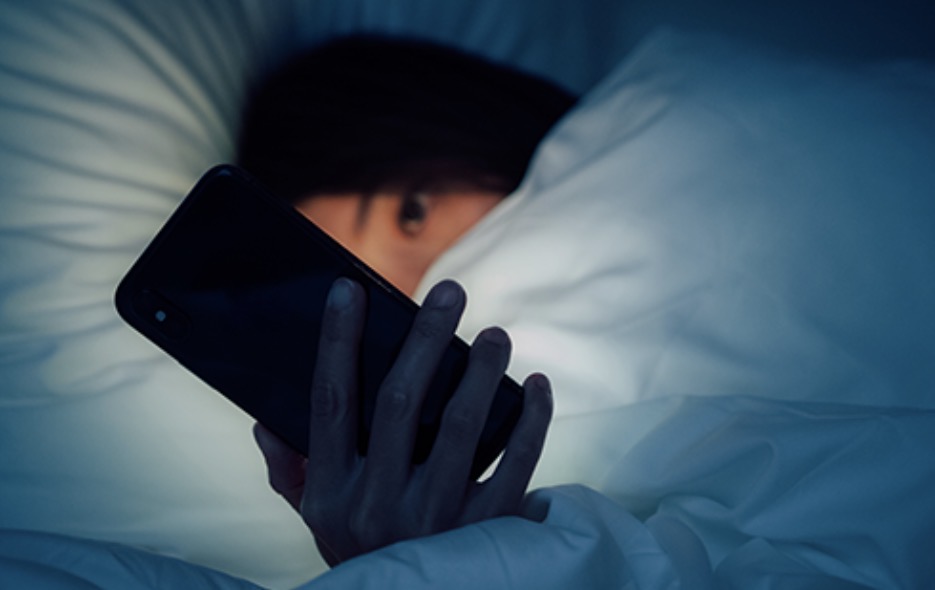
You know when every adult ever preaches that you shouldn’t be up on your phone late into the night, I hate to admit that they’re actually not wrong. When you stay up, scrolling late at night and comparing yourself to everything you see on your phone and just all together disrupting your sleep, you are actually setting yourself up for failure. Staying up leads to less sleep and less sleep leads to worse thinking and we all know worse thinking leads to more overthinking.
What should you take away from this. Well, just because something feels true to you at 2am doesn’t mean that it really is true. Do not forget that when you’re tired your thoughts are less reliable and thinks often feel different in the morning. So, instead of staying up late trying to think of a solution, try and get some rest instead as that can change your perspective or at least give you a clear mind to tackle the issue better.
So, when everything next feels overwhelming at 2am, try to remember that it doesn’t mean your life is falling apart, it might just mean you’re tired and need a good night’s sleep. You do not need to solve every thought and problem at 2am, some of them just need to wait until the morning.
















Post Comment
You must be logged in to post a comment.