Did Burnham survive Trump? – Ollie I
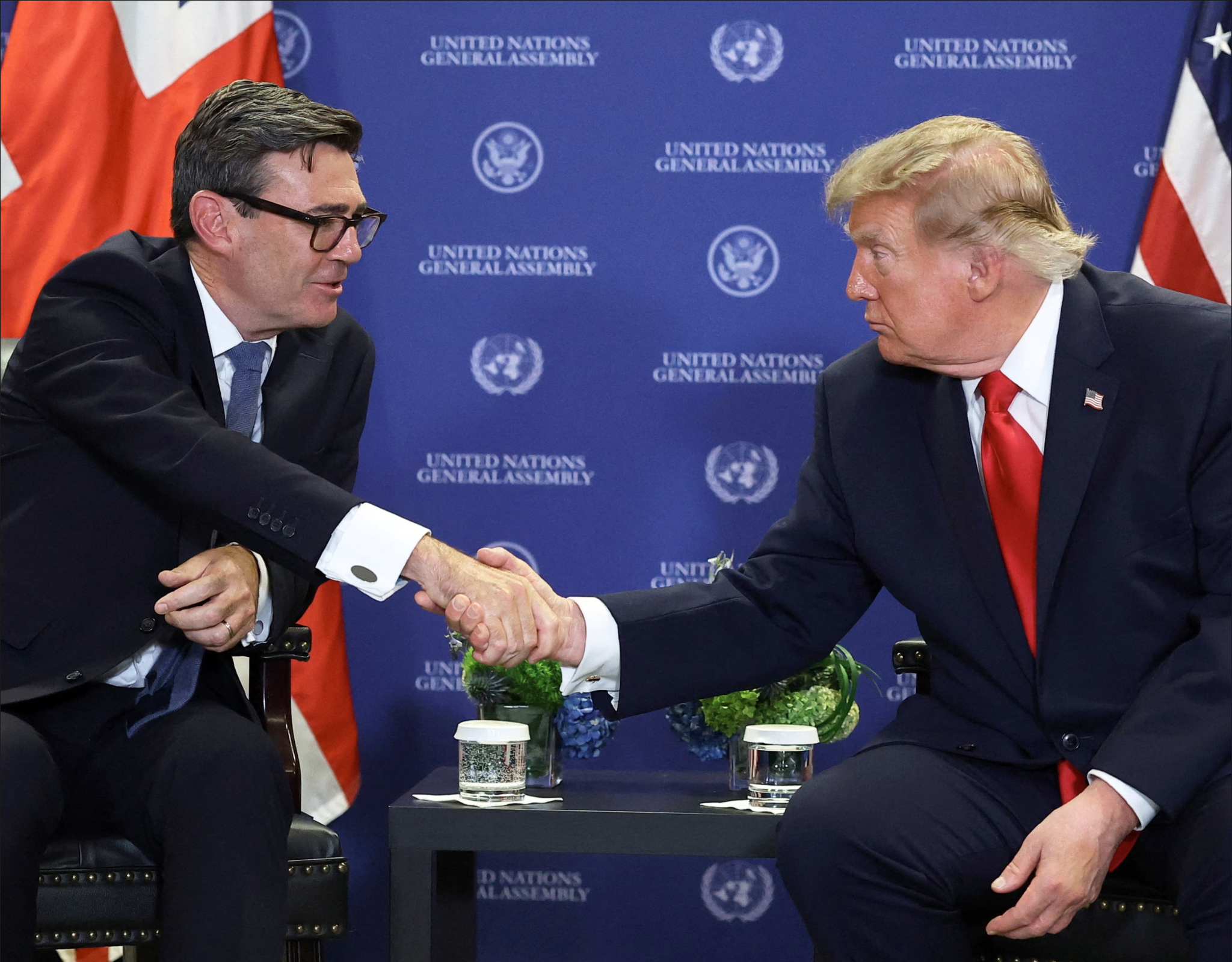
On Tuesday the 22nd of September, Prime Minister Andy Burnham met President Donald Trump for the first time in a bilateral meeting at the UN General Assembly (UNGA) in New York. Prior to the meeting between the two leaders, tensions had already been raised by Trump, who had claimed Burnham to be ‘extremely liberal’ and ‘the mayor of a town’ in the leadup to the Makerfield by-election and Labour party leadership election in July, where Burnham was voted in as head of the Labour Party. Likewise, Burnham has previously commented on Trump, back in 2017, stating definitively that he would refuse to meet the President as a ‘matter of principle’ if he were to visit Manchester, accusing Trump of sharing ‘hateful extremist material’ online, whilst describing US politics as ‘polarized’ and ‘poisonous’. With Burnham being newly elected, and with both leader’s past comments, this meeting carried immense diplomatic weight for Burnham.
In the opening of their talks, Burnham appeared understandably nervous to journalists and those watching the talks, although he eased into it as the meeting went on. Despite the evident initial anxiety of the PM and officials, Burnham managed to navigate the talks successfully, avoiding creating any potential points of tension in his first encounter with Trump. The President surprised many with his praise of Andy Burnham describing him as a ‘natural business person’ and describing UK – US relations as ‘more up now’ than under previous British leadership.
During his remarks on England, Trump confused the terminology for the UK, Great Britain and England, claiming that they could be used interchangeably, and joking that we have ‘more names than any other place in the world’, showing yet again his imprecise use of language and lack of understanding and awareness of the geography of the country of whom he was addressing the PM of. Many journalists commented on this post meeting, pointing out the irony given Trump’s Scottish heritage through his mother. Burnham kept quiet as Trump offered his demeaning conflation of the names and identities of the British Isles, opting not to correct the President live.
Despite the initial warm greeting, the meeting looked at some foreign policy divergence between London and Washington. Trump publicly shamed and challenged the UK’s proposal to hand over sovereignty of the Chagos Islands to Mauritius, as well as leasing back the Diego Garcia airbase, branding it as a ‘terrible’ and ‘ridiculous’ deal. Trump stressed the importance of the base as a vital and strategic location for US military operations in the region. Burnham addressed the fact that he had inherited the issue and would look to resolving the issue to address US security concerns.
Further foreign policy dispute emerged over the UK’s trade restrictions on Israeli settlements in the West Bank. When questioned by journalists, Trump initially brushed off the issue, claiming he was unaware of the policy change. Burnham stood his ground, reminding Trump that he had personally called him to explain the decision. He defended the measures as necessary to preserve a viable two-state solution, warning that taking no action would remove public trust in political leadership. While backing security and efforts against antisemitism, Burnham argued that there must be ‘meaning behind your words’, exposing a diplomatic divide between the two sides.
Despite the underlying tension between Burnham and Trump, foreign policy disputes and Trump’s lack of geographical awareness, Burnham successfully navigated avoiding any form of diplomatic fall out. The talks demonstrated that while differing opinions on foreign policy remain present between Washington and London, both leaders were able to establish a pragmatic and workable relationship on key shared priorities such as trade and AI.











Post Comment
You must be logged in to post a comment.