Pages vs. Pixels – Sophie P
Is the physical book truly dying?
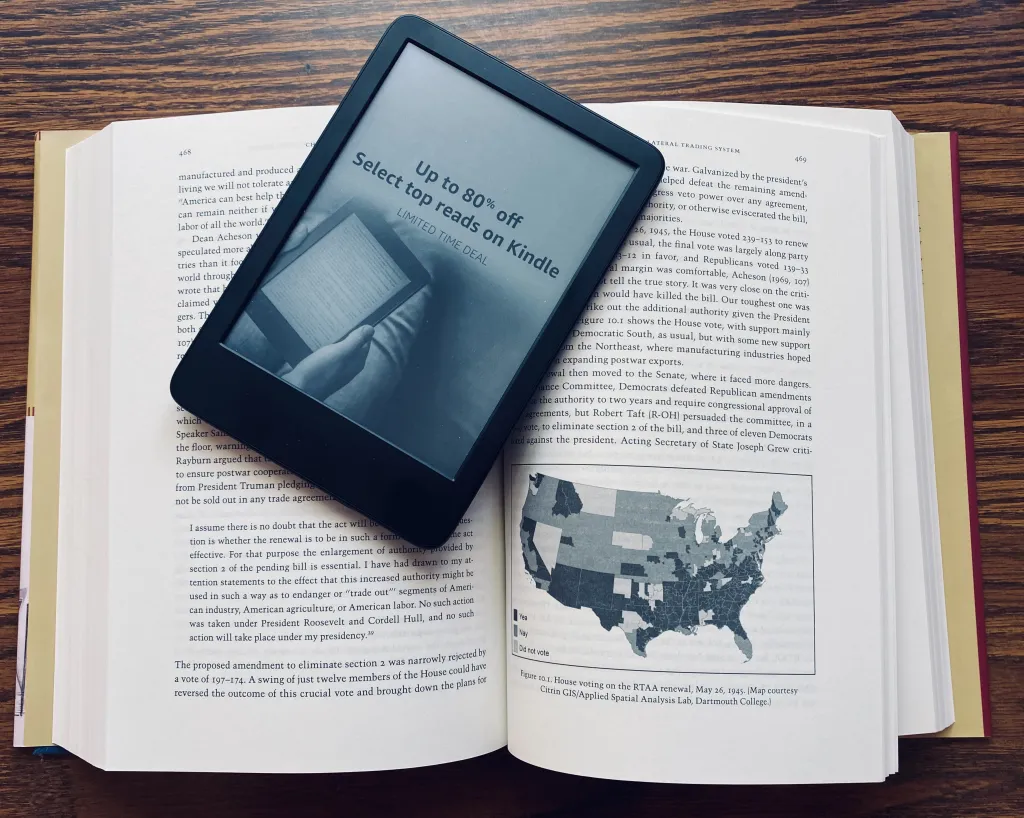
For generations before us, physical books were the only way to experience stories: manually turning pages, fixed fonts, and a constant fear of cracking the spine. Today, it is rare to see this, with people using Kindles, e-readers and even their phones, to indulge in the world of literature. In honour of LitFest, I am going to explore what we are gaining, and what we are giving up.
Benefits of Digital Reading –
- The convenience – The ability to carry thousands of books at one time, without weighing down your bag, along with features like adjustable font sizes, page colours and built in dictionaries make reading much more accessible.
- The light – For those who like to read to relax before bed, these is no need to have a light on, and the devices are much lighter than books, meaning you can focus on the story, rather than your tiring arms.
- The cost – A big benefit, particularly for students like us, is the financial relief of subscriptions like Kindle Unlimited, which offers millions of books for only £9 a month. This facilitates more reading, especially as brand-new paper back books can cost anywhere from £8 to £20.

So whats the catch?
- The environmental effects – Whilst it may seem obvious that a decrease in production of physical books will reduce the number of trees cut down by millions annually, as well as decreasing water usage and transport emissions, however e-readers, tablets, and other devices rely on non-renewable earth minerals and require intensive manufacturing processes. Furthermore, they consume electricity each time they’re charged and contribute to global electronic waste.
- The physical effects – Spending hours staring at a screen can cause digital eye strain, and lead to headaches. Exposure to the blue lights before bed can disrupt melatonin production, making it harder to fall asleep and reducing the quality of your rest. Meanwhile, reading from paper raises neither of these concerns.
- The technological annoyances – On paper, the words will always be there no matter where in the world you are, or what you’re doing. However, if you’re relying on device, you need to remember to charge it and bring the cable with you. Similarly, if you don’t remember to download the books ahead of time, you can be left staring a blank screen.

The publishing revolution –
The shift to online literature has not just changed how we read, but who gets to write.
Traditionally, there were significant barriers to publication like literary agents and publishing houses, who have strict criteria for what reached the shelves. Today, platforms such as Amazon KDP, Wattpad and Substack allow anyone to publish a book instantly. This allows up and coming authors, diverse voices and anyone who wants to, to build large audiences without spending thousands on marketing.
The downside of this is the quality doesn’t always match the quantity. Without fact-checkers, professional editors and proper oversight, the internet is flooded with books containing poor grammar, plot holes and typos, making it increasingly harder to find a story that’s up to par with the classics.
The verdict –
Many people still prefer the break from screens, enjoying the tactile experience and the more traditional approach to reading. Meanwhile, others can now enjoy the world of literature without the previous accessibility struggles.
It doesn’t have to be all or nothing, but if you are someone more drawn to the digital side of reading, I urge you to take a trip to the library this LitFest to remember where it all started.











Post Comment
You must be logged in to post a comment.