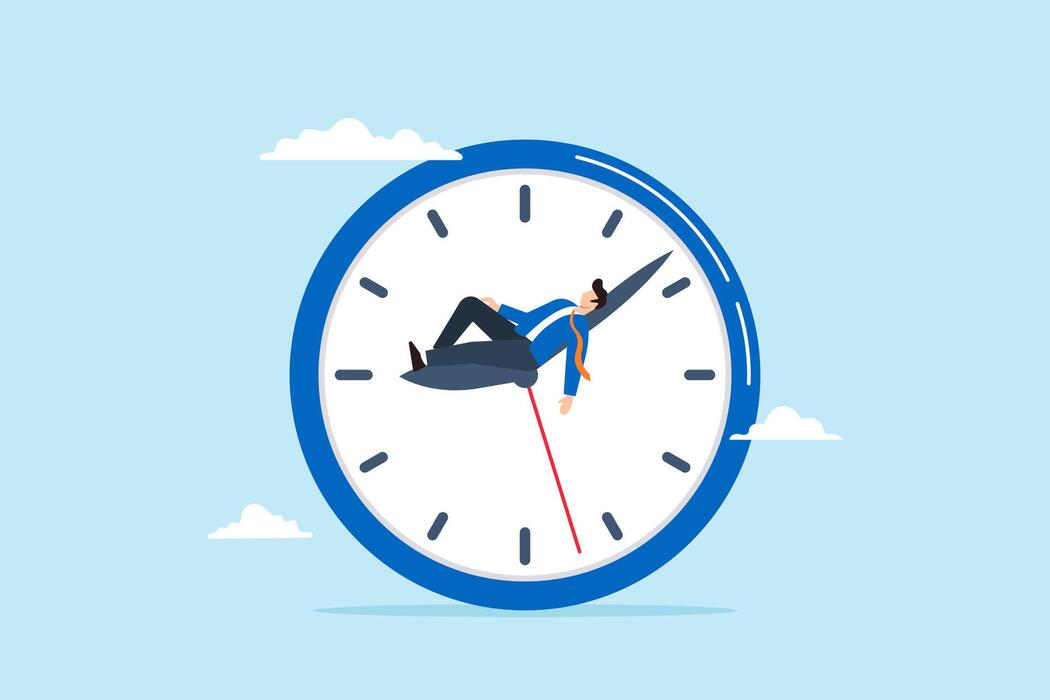
The ‘I’ll start at 17:00’ Trap – Ed S
You have prep to do. You look at your watch – it’s 16:57. You promise yourself you’ll start it at 17:00. The clock ticks round, you look at the time. Suddenly, it’s 17:02. Naturally, you now must wait until 17:30, because why on earth would you start now?
Why are we willing to waste 28 precious minutes just because the hands of the clock don’t line up neatly? Well, it turns out our brains are simply trapped in a cognitive glitch called the ‘Fresh Start Effect.’ It centres around our brain’s obsession with round numbers, Mondays, and – as it says on the tin – fresh starts. When the clock hits 17:02, we deem the whole hour to be ruined, forcing us to wait until our brain likes what it sees when it looks at those four numbers once more.
This irrational behaviour stems from something psychologists call Categorisation Bias. Instead of viewing time as a constant stream, our brains insist on chopping it into chunks of quarter hours, half hours, and sometimes even whole hours, depending on the size of the task at hand. Because 17:02 doesn’t mark the start of one of these slots, the 28 minutes in between get classed as wasted – a useless, academic wasteland where there will be little to no productivity. Just think about that: 28 minutes. Nearly half an hour, gone, just because it doesn’t look pretty. It’s hardly logical, but it’s engrained in our minds for no proper reason. 28 minutes is a short essay, half a maths worksheet, a whole prep task if you’re lucky. Yet simply because the last digit on your watch isn’t a zero, you write it off as worthless.
It’s all well and good that we now know why we do it, but what do we think it will actually achieve? This is down to what is known as Temporal Discounting – assuming we’ll gain some sort of supernatural ability if we wait those extra 28 minutes when, in reality, it’s just 28 fewer minutes to complete the same task. When you push the start time to 17:30, no problem is solved; it’s the exact same problem, just one that will happen in 28 minutes time. In your head, the ‘17:30 You’ is an academic superpower: infinite focus, zero urge to check notifications, and endless motivation. Neuroscientists have researched this phenomenon and have discovered that many people view their future self as almost a complete stranger. In reality, yourself in 28 minutes will have the same tired brain, the same distractions, and the same workload.
So how do you get out of this endless spiral of unproductivity? To start, embrace these ‘Odd Starts,’ set times like 17:07 or 17:19. Deliberately begin working at these times to combat a rigid mindset, training your brain to not need clean, pretty-looking numbers. Second, do some work. Plain and simple. Whatever time it is, commit just two minutes to completing some prep, sending an email you’ve been putting off, anything that has been neglected as a result of procrastination. You never know… you might like it and keep working.
There is a non-zero chance you’re procrastinating as you read this, so close the tab and do that one thing you’ve been putting off, even if it’s 17:02.















Post Comment
You must be logged in to post a comment.