When Knowing Less Feels Like Knowing Everything – Mia P
As you begin year 12 and start your journey toward your A levels, you start learning how to carve on every skill and ability you have available to you to score those top grades and set yourself apart in every application. So, when I saw a discussion of the Dunning-Kruger effect online, I knew I wanted to understand this phenomenon further.
So, what is the Dunning-Kruger effect?
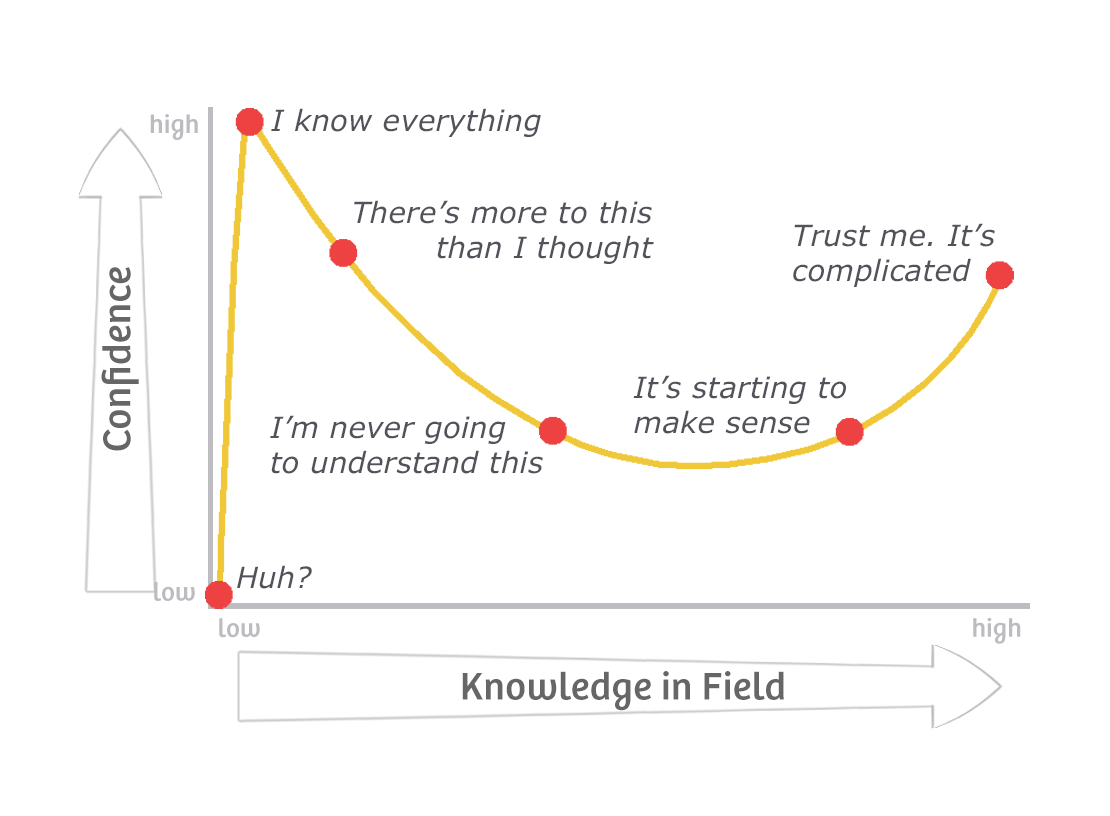
In short, it is used to answer the question “why do unskilled people overestimate their abilities and experts underestimate theirs?”. The Dunning-Kruger effects is a cognitive bias where people with low ability in a specific area overestimate their competence while experts often underestimate theirs. However, if you’ve ever read one of my psychological deep dive articles before, you know I don’t leave anything in short! This cognitive bias happens because the unskilled lack the meta cognitive skills to be able to recognise their own incompetence which often leads to inflated self-assessments whereas experts further understand the vastness of a subject and can therefore underestimate how much more knowledgeable, they are on that topic than others. This explains why novices in their field often feel like experts after only learning a little while the true experts are often more hesitant in the depth of their knowledge.
Where did the idea come from?
The concept was first introduced in 1999 by psychologists David Dunning and Justin Kruger. Through a series of studies, they discovered that people who performed poorly on tests of logic, grammar, or humour often believed they had done very well. The reason? They lacked the skills needed to recognise their own mistakes. In simple terms, Dunning and Kruger suggested that if you do not know much about a topic, you may not know enough to realise how large that topic is and therefore how little you actually know. Whereas those experts, they know how big the topic is, and they’re aware of the percentage they know which often leads to them feeling they do not know a lot at all compared to the bigger picture.
An example:
Imagine someone who has watched a few documentaries online and read a few books about marine life, and suddenly they feel like an expert. This is due to a combination of them knowing more than most others on the topic but also because they don’t yet understand the depth of the subject, so they believe they have mastered it. Meanwhile a marine biologist who has been studying marine life for the past 30 years might feel unsure and less confident, because they are aware of just how much there is to learn, but also how much of all of the oceans is still undiscovered and studied.
Why does this happen?
There are two main reasons for the Dunning-Kruger effect to take place:
1. Lack of knowledge can limit self awareness – if you don’t understand a subject well, you may not be able to judge your own skill accurately.
2. Confidence often comes before competence – early learning often brings excitement and confidence, even before true understanding develops.
Why it matters
The Dunning-Kruger effect affects all of us. It can be seen in classrooms, social media, sports, politics and everyday conversations. When people overestimate their abilities, they may find themselves refusing to learn or accept feedback, spreading misinformation or making poor decisions. However, on the positive side, understanding this effect can help us become better learners and better listeners. But don’t let this concern you because nobody is ever fully immune; stay curious and keep learning, ask questions instead of assuming, be open to feedback and critics and remember that confidence doesn’t always equal correctness and you will be a little bit more resistant to the effect.
So, the Dunning-Kruger effect isn’t about being unintelligent, it’s about being human. Everyone starts out not knowing much, but what matters is recognising our limits, staying humble and continuing to learn. After all, the more we know, the more we realise just how much there still is to discover.

So, what is the Dunning-Kruger effect?
In short, it is used to answer the question “why do unskilled people overestimate their abilities and experts underestimate theirs?”. The Dunning-Kruger effects is a cognitive bias where people with low ability in a specific area overestimate their competence while experts often underestimate theirs. However, if you’ve ever read one of my psychological deep dive articles before, you know I don’t leave anything in short! This cognitive bias happens because the unskilled lack the meta cognitive skills to be able to recognise their own incompetence which often leads to inflated self-assessments whereas experts further understand the vastness of a subject and can therefore underestimate how much more knowledgeable, they are on that topic than others. This explains why novices in their field often feel like experts after only learning a little while the true experts are often more hesitant in the depth of their knowledge.
Where did the idea come from?
The concept was first introduced in 1999 by psychologists David Dunning and Justin Kruger. Through a series of studies, they discovered that people who performed poorly on tests of logic, grammar, or humour often believed they had done very well. The reason? They lacked the skills needed to recognise their own mistakes. In simple terms, Dunning and Kruger suggested that if you do not know much about a topic, you may not know enough to realise how large that topic is and therefore how little you actually know. Whereas those experts, they know how big the topic is, and they’re aware of the percentage they know which often leads to them feeling they do not know a lot at all compared to the bigger picture.
An example:
Imagine someone who has watched a few documentaries online and read a few books about marine life, and suddenly they feel like an expert. This is due to a combination of them knowing more than most others on the topic but also because they don’t yet understand the depth of the subject, so they believe they have mastered it. Meanwhile a marine biologist who has been studying marine life for the past 30 years might feel unsure and less confident, because they are aware of just how much there is to learn, but also how much of all of the oceans is still undiscovered and studied.
Why does this happen?
There are two main reasons for the Dunning-Kruger effect to take place:
1. Lack of knowledge can limit self awareness – if you don’t understand a subject well, you may not be able to judge your own skill accurately.
2. Confidence often comes before competence – early learning often brings excitement and confidence, even before true understanding develops.
Why it matters
The Dunning-Kruger effect affects all of us. It can be seen in classrooms, social media, sports, politics and everyday conversations. When people overestimate their abilities, they may find themselves refusing to learn or accept feedback, spreading misinformation or making poor decisions. However, on the positive side, understanding this effect can help us become better learners and better listeners. But don’t let this concern you because nobody is ever fully immune; stay curious and keep learning, ask questions instead of assuming, be open to feedback and critics and remember that confidence doesn’t always equal correctness and you will be a little bit more resistant to the effect.
So, the Dunning-Kruger effect isn’t about being unintelligent, it’s about being human. Everyone starts out not knowing much, but what matters is recognising our limits, staying humble and continuing to learn. After all, the more we know, the more we realise just how much there still is to discover.














Post Comment
You must be logged in to post a comment.