A Royal Reckoning – Mia P
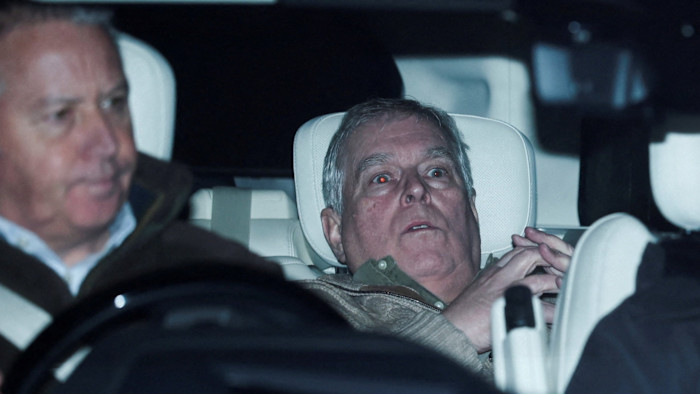
As many of you will know on February 19th, Andrew Mountbatten-Windsor – formerly known as Prince Andrew – was arrested on suspicion of misconduct in public office in the UK. He was later released by police – leading to the photo that has swarmed the media recently of him attempting to make an inconspicuous exit in the back of a car – and he is now said to be “under investigation” meaning the case is still in review and no formal charges against him have yet been filed. In recent years, the former Duke of York has been at the centre of significant public controversy after his association with the late American financier Jeffrey Epstein led to intense media controversy and legal action in the United States of America. In 2022, Andrew reached an out-of-court settlement in a civil case brought by Virginia Giuffre, in which he denied the allegations but agreed to a financial settlement without admitting liability.
This is a rare moment in British History:
This development has come as especially remarkable to many as no senior member of the British royal family has been arrested in over 300 years, with King Charles I of England being the last member to be arrested during the English Civil War where he was later executed in 1649. It is extremely unusual for senior members of the British royal family to face legal proceedings, especially in modern times. While monarchs and royals historically held immense political power, today’s monarchy operates under a system with Parliament making the political decisions (not the King) following the 17th century execution of King Charles I where since the power of the monarchy has steadily declined to the point of becoming largely symbolic and ceremonial.
Why was he arrested?
According to reports, police are investigating whether Andrew may have acted improperly while working years ago as a trade envoy for the UK government. The release of the “Epstein files” suggested that he may have shared confidential government information with convicted sex offender Jeffrey Epstein decades earlier. Although these wrongdoings have been denied countless times over, the newly released information was what has prompted an official police investigation into Andrew.
The Royal Family’s Response
King Charles III has stated that “the law must take its course”, expressing his support for the investigation to take place and saying that the royal family will cooperate with authorities on the case. Andrew has already stepped back from royal duties and was stripped of his titles in 2025 resulting from the ongoing public scrutiny. This does mean he no longer holds the title “His Royal Highness” and does not perform any official royal roles, however the controversy continues with him remaining legally eighth in line to the throne raising questions of whether he should be removed from the Line of Succession all together.
So why does this matter?
For many people, the arrest of a senior royal is shocking not just because of the 300-year gap since the last royal arrest, but because it raises big questions about accountability, privilege and public trust within the monarchy. Here are some of the keyways that monarchy could be affected by this:
– Public Trust and Accountability – many think the monarchy should be held to the same legal standards as everyone else, as after all, they are also only humans. So, an arrest like this and the debate over whether someone in the royal family can be investigated highlights how important fairness and transparency are to modern society.
– Discussions in other Commonwealth countries such as New Zealand and Australia about the possible removal of Andrew from the line of succession highlights how international this issue has become and how widespread the impact of Andrew’s actions are. While some may argue that it would be highly unlikely for Andrew to reach the throne in his lifetime, these talks demonstrate that royal matters still attract intense political and public interest globally and so his name in the Line of Succession cannot be seen to taint the integrity of the royal family.
What This Means for the Future
The British monarchy survives largely because of public consent. Unlike in the past, with symbolic power rather than political, events like this test whether the institution can adapt to modern expectations.
While Andrew’s situation is deeply controversial and whether this leads to legal charges, changes in royal tradition, or deeper public debate, what is important is the awareness that even centuries-old institutions like the British monarchy are now shaped by public expectations and the legal standards of the modern world and therefore this societal modernity must be leaned into for the royal family to stay the figure heads they are within British society. As the debates about privilege, accountability and equality continue within the coming weeks, the royal family faces the ongoing challenge of balancing tradition with modern values, and ensuring that no individual controversy undermines the stability of the institution as a whole.














Post Comment
You must be logged in to post a comment.