What does the Concorde and a balloon have in common? -Annabel L
Did you know that every single time you burst a balloon, a “sonic boom” is created? I started to research this topic because I found it so surprising that a simple balloon could release so much sound energy! I am very interested in science as it is so fascinating to learn about our world.
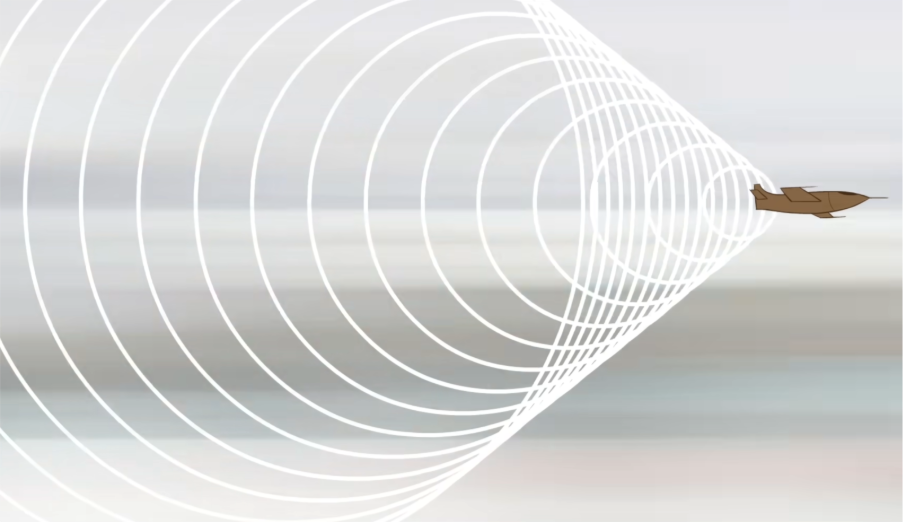
The most well-known instances of “sonic booms” occur when an aircraft travels faster than the speed of sound (767 mph or “Mach 1”). After breaking the sound barrier, the rapid, continuous compression of air pressure waves from the aircraft merge into a cone-shaped shock wave.

A supersonic aircraft can generate a Mach Cone; this is caused when waves are forced together when an aircraft overtakes sound waves that it has already emitted. It does this whilst also generating new waves at the same time. People down on the ground won’t be able to hear the sound until the aircraft has passed them because it is travelling faster than the sound it produces. In fact, we don’t hear these sonic booms very often in the UK because normally aircraft are not allowed to fly at supersonic speeds over land. However, sometimes when the RAF need to send a fighter jet, as quickly as possible, to deal with an emergency, special permission is given and then people nearby on the ground get startled by the sonic boom. This normally gets reported on the local news feeds. Search up “sonic boom Suffolk” and you’ll see what I mean!
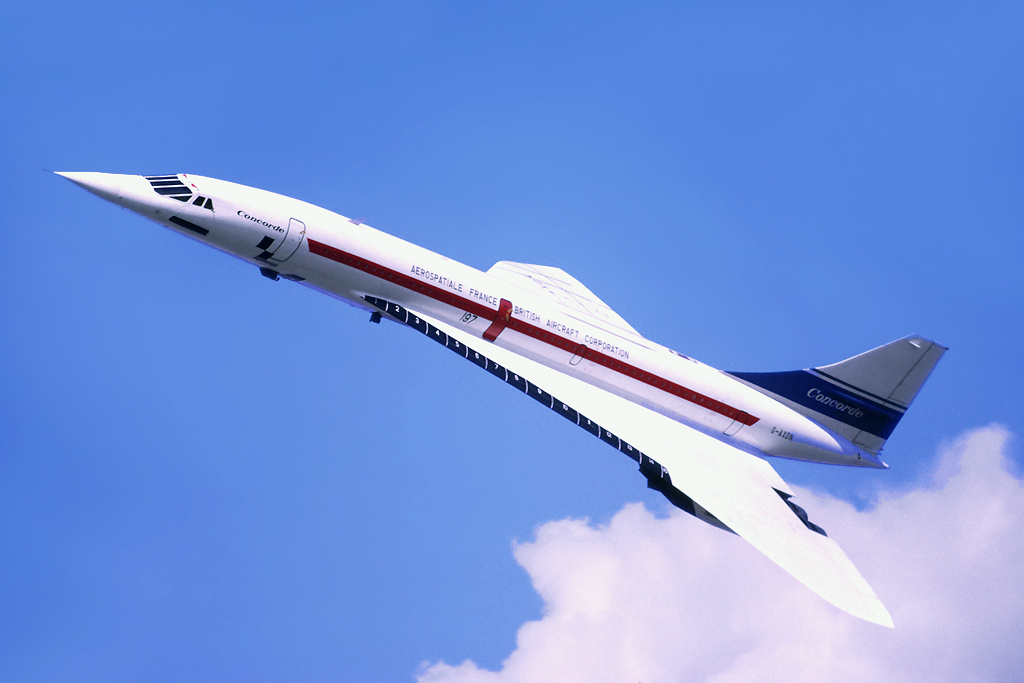
One of the most famous aircraft to exceed the speed of sound is the Concorde. The Concorde has a maximum speed of Mach 2.23 (Over twice the speed of sound) which is approximately 1,450 mph (at the height that it flies at)! What is most incredible is that the Concorde was designed as a passenger airliner not a military fighter jet. The Concorde first took flight on March 2nd 1969, and first broke the sound barrier on October 1st the same year. Only 20 were built, with 6 of those being test models, and the rest were in service with either British Airways or Air France. The Concorde was so fast that it could fly from London (LHR) to New York (JFK) in just 3.5 hours, with a cruising speed of Mach 2.04! However, the Concorde was retired in October 2003, mainly due to being very expensive to fly (using up about 6,771 gallons of fuel per hour), high maintenance, and a large and quick decline in passengers because of the Concorde crash in Paris, in July 2000, of Air France flight 4590.
So, what has this got to do with balloons? Well, a popping balloon is also able to create a sonic boom because the rapid tearing of its stretched latex skin causes the material to snap back at speeds that exceed the speed of sound. When the balloon bursts, the energy stored (elastic potential energy) in the stretched rubber – due to the strain on the skin – is released almost instantly, causing the edges of the tear to travel at supersonic speeds. In more detail, when a small hole is made in the skin, the tension pulls the rubber away from the hole’s opening immediately. Various studies have shown that the rip in the rubber propagates at speeds up to roughly 1275 mph, which is faster than the speed of sound in air (approximately 767 mph)!

So, after understanding what a supersonic boom is, how an aircraft generates one, what the Concorde is, and how a tear in a balloon propagates faster than the speed of sound, we are still left with the same question that we started with…
“What does The Concorde and a balloon have in common?”
Well, they both create an amazing, and very loud, sonic boom!
By Annabel L















Post Comment
You must be logged in to post a comment.